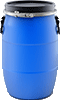
How much water do I need?
One gallon per person per day should provide enough for sanitary and hydration needs in an emergency. It is recommended that you store about two weeks’ worth, or 14 gallons, of water per person.
How do I store it?
Stored water must be pure and disinfected to prevent microbial growth, then stored in food-grade containers (water from the tap stores well). Stored water should then be protected from light and heat to prevent algae growth. Water should also be stored in areas that will not cause damage to the home if the containers leak. Water containers should not be stored directly on a concrete floor. Concrete easily changes temperatures and continues to give off moisture for years so you should place a small platform under the water container for air movement.
How long will it keep?
Commercially packaged water can be stored for about 5 years; home filled stored water should be changed annually. Stored water will go flat but can be aerated prior to consumption by pouring it between two containers a few times.
What kind of container can I use?
Storage containers should be airtight, resistant to breakage, and heavy enough to hold water--which weighs 8.34 pounds per gallon. They should have a lining that will not rust or affect the flavor. Consider the size, weight (once filled with water), ease of use, rotation and portability of the container you select. See the list of common containers below.
Do I need to put chlorine in the water before I store it?
If the water source is not chlorinated, household bleach (5% sodium hypochlorite) should be added. Regular, unscented bleach is best but brand does not matter. No bleach is needed if you are storing chlorinated water from a public water supply. If you don’t know whether your tap water has been chlorinated, you can call your water provider or test your tap water with a spa kit (a commercially-available water quality testing kit for home hot tubs and pools).
How much chlorine do I need to use?
Add 1/4 teaspoon (16 drops) of bleach per gallon of water if the water is cloudy and 1/8 teaspoon (8 drops) if the water is clear.
Why is emergency water my responsibility?
A person can only survive a few days without water. The easy availability of clean drinking water right now often makes us complacent about our need to store water. However, you cannot assume that the current water infrastructure will be intact after a major disaster or other emergency. Water is delivered to your home through a series of buried pipes of various sizes and materials. If these pipes are damaged, it could take from a few days up to a few weeks to get them repaired to deliver water to your home again. Natural disasters such as floods or earthquakes may cause such damage, and pollute or disrupt public water supplies. It is wise to prepare now for such an event by storing appropriate amounts of water that will meet your water needs in an emergency. One easy way to remember how to prepare is the “S.I.T.” method.
S – Store
Stored water must be pure, treated water to prevent microbial growth, and stored
in food-grade containers. See below for specific information on storing water in
your home.
I – Isolate
There are several gallons of clean water in the water heater and piping within your
home at all times. If a natural disaster occurs, such as an earthquake, you should
assume that the public water supply is no longer safe to drink and this may be your
safest source of drinking water. After securing the safety of your family members,
please isolate your home from the public water system by turning of the main water
valve to your home. This will allow you to use this water even if the public water
system has been contaminated. Assume a boil order is in effect after an emergency
until you hear from an official otherwise.
T – Treat
Depending upon the disaster at hand, water may still be available but not safe to
drink. Contaminated or suspect water can be treated at home during an emergency
to make it safe for consumption. Several of the easiest and simplest ways to do
this are discussed below.
What contaminants should I worry about?
There are several possible contaminants that you need to consider when making a selection for emergency water: bacteria, protozoa, viruses and chemicals are all possible contaminants that make water unsafe to drink. Debris and color in the water may not be harmful by themselves. But if they carry bacteria, the water becomes unsafe. Aesthetic components such as taste, odor, and hardness are not at all harmful to health, but they may be a consideration in the storage or treatment option you choose.
Can I just plan on treating water as I need it, instead of storing it?
Since some treatment equipment is easier to store than water, and you never know the nature of the disturbance that will necessitate the need for water, we recommend preparing for at least one treatment option in addition to storing water. Treating water instead of storing it will save space but relies on a water source and one may not be available. If the delivery of water to your home is interrupted, a treatment option will not work. However, if water is still available but the safety and quality of the water is suspect, then treatment methods will be useful in making that water safe to drink.
How long do I need to boil contaminated water?
In the valleys of Utah, boiling water for 3 to 5 minutes will kill pathogens (bacteria, protozoa, viruses, etc.). The higher the elevation, the longer you need boil the water to kill the same pathogens (as much as 12 minutes in the high mountains). Note that boiling will change the taste of the water and should be cooled before drinking.
Storage Containers
| Container | Description / Pros | Cautions / Cons |
|
Plastic Juice or Soda Bottles |
Use clear plastic containers with a PETE recycle code on the bottom. Used containers should be thoroughly cleaned and rinsed. They are inexpensive and readily available. Do not use milk bottles. |
Used containers often taint the flavor of the water. Storage area needs to consider bottle shape and size. These containers need to be protected against light and leakage as they are typically thinner plastic. |
|
Heavy Plastic Buckets, Carboys or Drums |
These should be food grade and also either stamped with a PETE or HDPE recycle code. Can be purchased new at emergency supply stores and sometimes used ones are available (such as from soda syrup). |
More expensive than used bottles. Larger drums are heavy when filled and often bulky for storage. You also need to consider how you will get the water out for use and rotation. |
|
Commercially Packaged Water |
You can purchase water that has been commercially bottled. This water will keep for up to five years. You can also get five-gallon containers (typically in boxes or bags) at emergency supply stores. |
These are convenient, clean, you can pick the taste you prefer, and they are sealed for longer storage. They will be more expensive per gallon than storing your own and they are not reusable. |
|
Water Heaters |
You may close the inlet valve immediately after the water supply is disrupted and use the water in your water heater. |
This will not protect against contamination of the water supply but would be a good source of water for non-potable needs. |
|
Water Beds |
A king size water bed holds about 250 gallons of water. This water contains an algaecide. Do NOT drink it. |
Not usable for potable water but may be used for sanitation needs. |
|
Bleach Bottles |
These are made from good plastic for storage but are not considered "food-grade". |
Since it is hard to determine whether you have cleaned out all of the bleach these are technically not suitable for potable water but may be used for sanitation needs. |
Treatment Alternatives
| Method | Description / Pros | Cautions / Cons |
|
Hand Pump Filtration Devices |
Outdoor/Recreation stores have a variety of different small hand operated backpacking filters. Most are now able to remove each of the possible harmful contaminates. They range in price from $60 to $200. |
These are effective but slow and are typically intended for just one person’s use. Therefore, you may find them difficult to treat enough water for a whole family. |
|
Point of Use Filtration Devices |
These filtration units are typically installed at your kitchen sink and are intended for continuous use. Make sure you look closely at what the system will and will not remove and what maintenance is required when purchasing. ALL units require regular maintenance to function properly. |
Units that remove harmful contaminants, not just change the flavor, may be expensive. Some systems will come with a service contract. If they do not, then it is your responsibility to perform the required maintenance on these units. Also consider the fact that these units are not portable should you need to leave your home. |
|
Chemical Addition |
Iodine tablets can be purchased from outdoor, recreation or emergency supply stores. They are easy to use but vary in dose depending on the brand. They typically cost around $1 to $2 per gallon treated. Chlorine dioxide tablets are also now available. They cost about twice as much as the iodine tablets. Unscented, household chlorine bleach can also be used. Add 1/8 teaspoon or 8 drops per gallon of water. |
Iodine treatment is effective against microbial and virus contaminants but only marginally effective against protozoa. They will discolor the water and often creates an objectionable flavor. Some brands now come with a neutralizer tablets to correct the color and taste at an additional cost. Chlorine dioxide is also effective against most contaminants and generates less taste complaints. |
|
Ultraviolet Light |
There are several commercially available devices that use UV light to disinfect small containers of water. There are also several examples of homemade UV treatment designs on the internet. This technology may be effective to inactivate several pathogens such as bacteria and protozoans but does not protect against viruses. |
The effectiveness of UV light treatment will be significantly diminished the dirtier or cloudier the water is. In this case the water should be filtered through a clean cloth and allowed to settle before UV treatment is applied. The commercially purchased lamps require batteries and the homemade versions rely on sunlight. The season and weather will effect these homemade varieties making them less reliable than may be desired. |
|
Boiling |
Boiling water for 3 to 5 minutes will kill pathogens. The higher the elevation the longer (as much as 12 minutes) you need to boil the water. Since power disruptions may accompany water emergencies, additional fuel storage should be considered for this treatment option. |
Most people do not like the taste of boiled water and it takes a long time for the water temperature to reduce to consumable levels. Since much of the water is lost to evaporation, this is not a good option if water supply is limited. |